


Senna hebecarpa - Wild Senna
$19.99
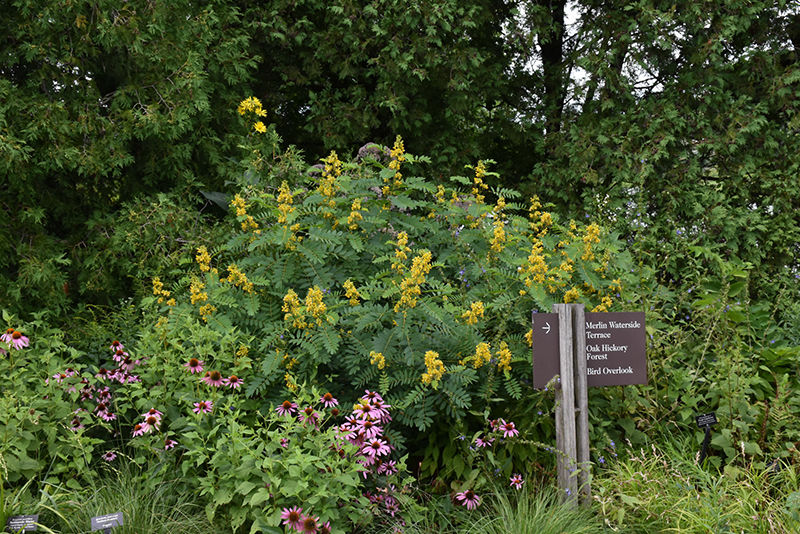
This native perennial produces dense clusters of golden yellow flowers over a mound of airy green foliage; non-aggressive and non-invasive, a great choice for the garden or border; remove faded flower heads to maintain appearance
Height: Plant Height: 3 feet. Spread: 3 feet. Sun: full sun to partial shade. Hardiness zone: 4a.
Ornamental features
Wild Senna features showy racemes of gold cup-shaped flowers rising above the foliage from late summer to early fall. Its oval pinnately compound leaves are dark green in color. The foliage often turns yellow in fall.
Landscape
Wild Senna is an herbaceous perennial with an upright spreading habit of growth. Its relatively fine texture sets it apart from other garden plants with less refined foliage.
This plant will require occasional maintenance and upkeep, and is best cleaned up in early spring before it resumes active growth for the season. It is a good choice for attracting bees, butterflies and hummingbirds to your yard. Gardeners should be aware of the following characteristic(s) that may warrant special consideration;
Recommended for: Accent, Mass Planting, General Garden Use, Naturalizing And Woodland Gardens, Container Planting.
Planting and growing
Wild Senna will grow to be about 3 feet tall at maturity extending to 4 feet tall with the flowers, with a spread of 3 feet. Its foliage tends to remain dense right to the ground, not requiring facer plants in front. It grows at a fast rate, and under ideal conditions can be expected to live for approximately 10 years. As an herbaceous perennial, this plant will usually die back to the crown each winter, and will regrow from the base each spring. Be careful not to disturb the crown in late winter when it may not be readily seen!
This plant does best in full sun to partial shade. It is very adaptable to both dry and moist locations, and should do just fine under typical garden conditions. It is not particular as to soil type or pH. It is highly tolerant of urban pollution and will even thrive in inner city environments. This species is native to parts of North America. It can be propagated by division.
Photo courtesy of NetPS Plant Finder.
Quantity